







Subscribe to Our Newsletter
The integration of obesity management into the treatment paradigm could involve a multidisciplinary approach, incorporating dietary interventions, physical activity, behavioral changes, and potentially even novel pharmacological agents aimed at curbing weight gain. By addressing obesity as a modifiable risk factor, healthcare professionals may be able to not only treat cancer more effectively but also prevent it in certain instances. The introduction of weight management as another pillar in cancer care would require rigorous scientific research and clinical trials. However, if successfully implemented, it could revolutionize the way we approach cancer treatment and prevention, placing a strong emphasis on the patient’s overall well-being and lifestyle choices, and ushering in a new era of holistic cancer care.
It is the purpose of this website to draw attention to this unmet need in medicine and to address some of the questions that surround this new medical field.
AI Generated Summary Podcast (8:02)
NCI Obesity Fact Sheet
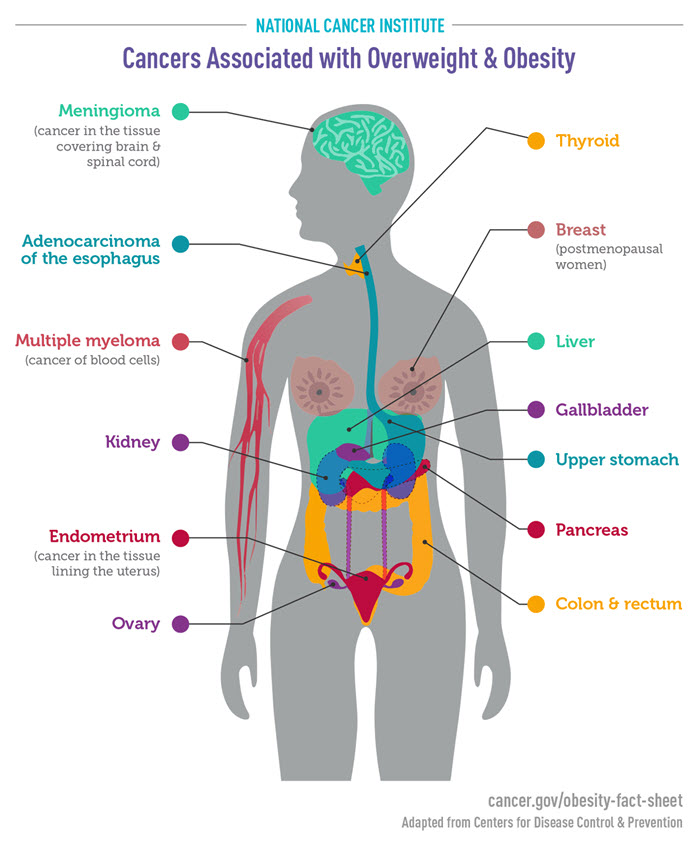
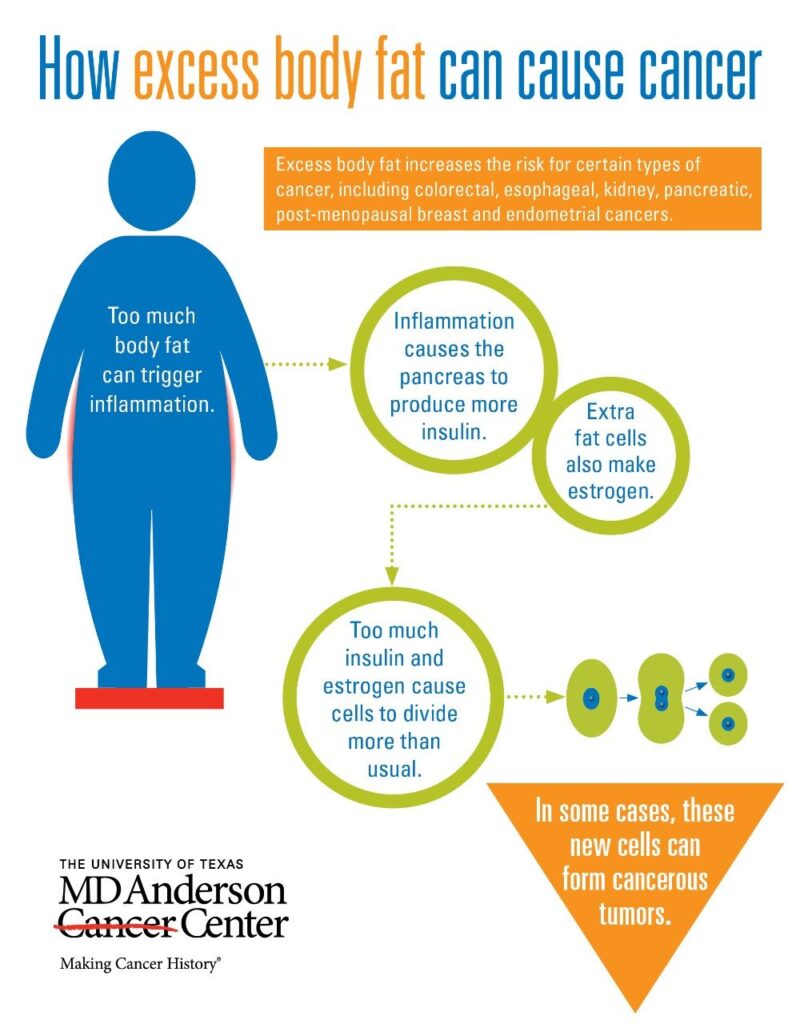
Obesity is a major health concern that is not only associated with chronic diseases like cardiovascular disease, but it is also linked with an increased risk of cancer. According to the National Institutes of Health (NIH), 4-8% of all cancers can be attributed to obesity. The underlying mechanism of obesity causing cancer is complex, and researchers are still trying to gain a better understanding of it. However, researchers know that certain lifestyle changes can help reduce the risk of developing cancer due to obesity. In particular, diet, exercise, and behavior therapy are the mainstay of intervention to fight against obesity and, thereby, lower the risk of cancer. For more information, please click on the link to the research paper cited and also check out the NIH’s National Cancer Institute infographic on the cancers associated with overweight and obesity.
AI Generated Summary Podcast (9:48)
This webpage from the Centers for Disease Control and Prevention (CDC) explores the strong link between obesity and cancer risk. It outlines how being overweight or obese increases the likelihood of developing 13 specific types of cancer, which account for 40% of all cancer diagnoses in the United States. The article also discusses how excess weight can lead to bodily changes, such as inflammation and hormone imbalances, which contribute to cancer development. Finally, the CDC provides practical steps for individuals and healthcare providers to reduce the risk of obesity-related cancers, emphasizing the importance of healthy lifestyle choices and preventative measures.
AI Generated Summary Podcast (7:06)
Summary
The World Health Organization (WHO) has released a report on the growing epidemic of obesity in Europe and Central Asia. The report reveals that obesity is a major cause of preventable death and disability, linked to 13 types of cancer, and is expected to surpass smoking as the leading preventable cancer risk factor in some countries. The report emphasizes that obesity is a complex condition that requires multidisciplinary treatment and management, and urges the implementation of comprehensive policy interventions, such as restricting unhealthy food marketing to children, taxing sugar-sweetened beverages, and improving health systems to address obesity management.
AI Generated Summary Podcast (18:57)
Summary
This Cancer Research UK excerpt details the strong link between obesity and cancer risk in adults. Obesity is identified as the second leading cause of cancer in the UK, increasing the likelihood of developing 13 specific cancer types. The text explains how excess fat influences growth hormones, inflammation, and sex hormones, thereby promoting cellular division and cancer development. Methods for assessing healthy weight, such as BMI and waist-to-height ratio, are discussed, along with advice on maintaining a healthy weight to reduce cancer risk. Importantly, the text clarifies that obesity does not cause cancer in children.
AI Generated Summary Podcast (13:24)
Summary
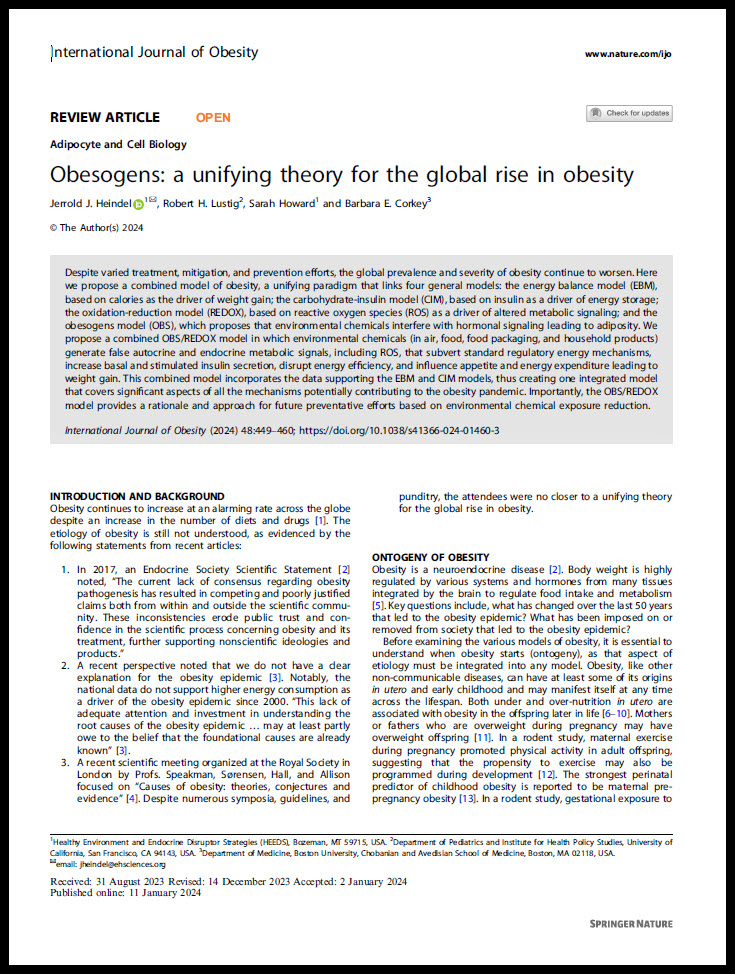
This paper proposes a new model of obesity that combines the obesogens model (OBS) and the oxidation-reduction model (REDOX). The OBS model posits that environmental chemicals can disrupt hormonal signaling and lead to adiposity, while the REDOX model suggests that reactive oxygen species (ROS) generated by these chemicals can alter metabolic signaling, increasing insulin secretion and disrupting energy efficiency. The authors argue that this OBS/REDOX model can explain the data supporting both the energy balance model (EBM) and the carbohydrate-insulin model (CIM), which are the two most prevalent models of obesity. They propose that obesogens act by interfering with hormone receptors and hijacking redox signaling pathways, ultimately leading to inappropriate and false signals about energy status, resulting in weight gain.
AI Generated Summary Podcast (10:11)
Summary
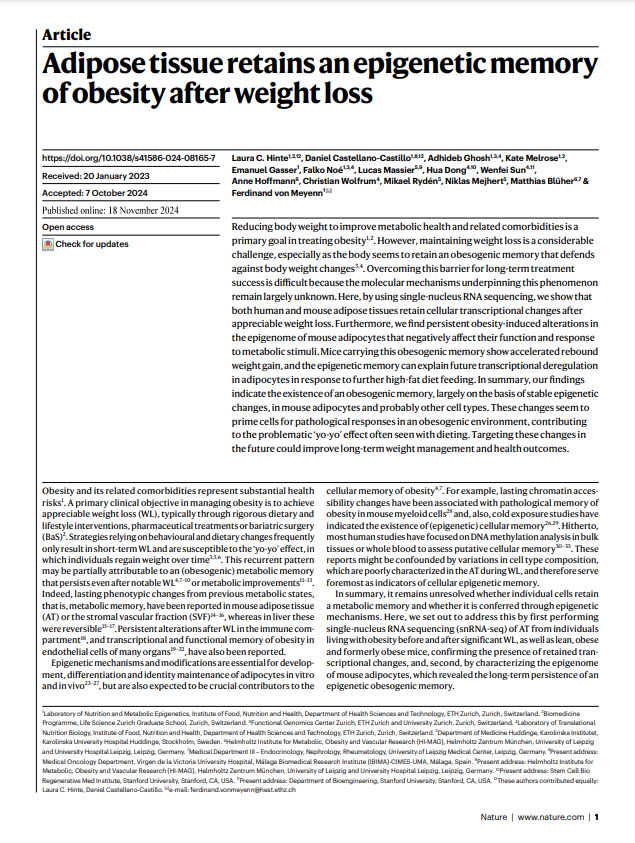
This research paper investigates the “obesogenic memory” – the persistent cellular and epigenetic changes in adipose tissue after weight loss. Using single-nucleus RNA sequencing and multi-omics analysis in both humans and mice, the study demonstrates that significant transcriptional and epigenetic alterations remain in adipocytes even after substantial weight loss. These persistent changes, primarily driven by epigenetic modifications at enhancers and promoters, prime cells for pathological responses, potentially explaining the common “yo-yo” effect of weight regain. The findings suggest that targeting these epigenetic changes could improve long-term weight management.
AI Generated Summary Podcast (17:39)
Summary
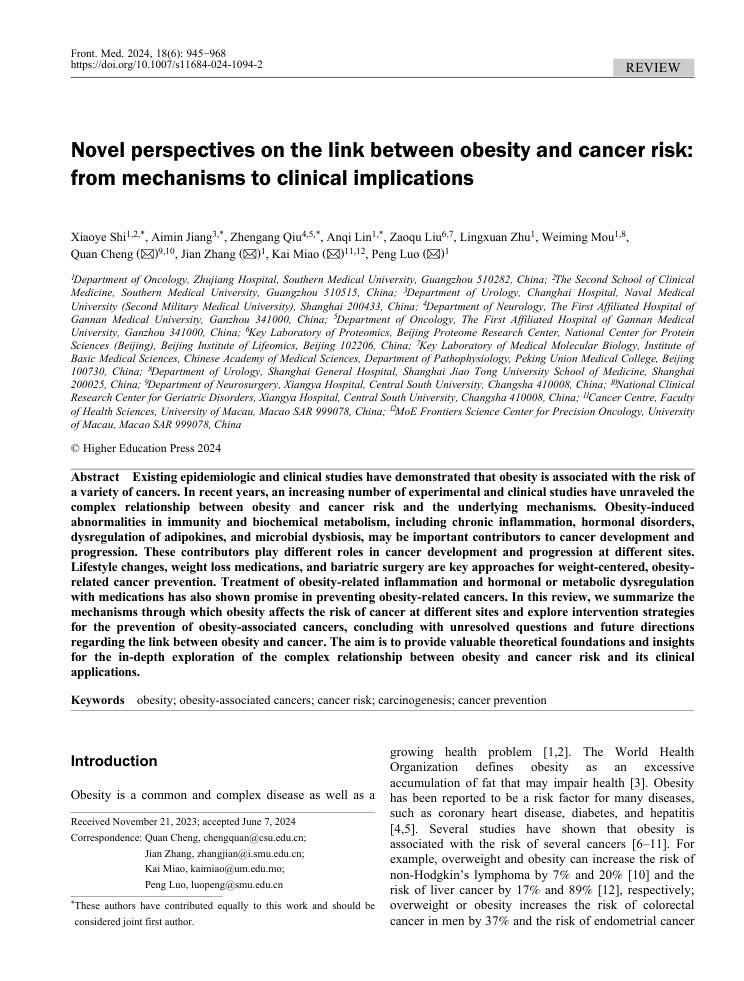
This research review examines the complex relationship between obesity and cancer risk. It details several mechanisms linking obesity to cancer development, including chronic inflammation, hormonal imbalances (especially estrogen and progesterone), gut microbiota dysbiosis, and adipokine dysregulation. The review also explores various prevention strategies, such as lifestyle changes, weight-loss medications, and bariatric surgery, and proposes areas for future research, focusing on the distinctions between hereditary and acquired obesity, the impact of aging, and the interplay between obesity, gut microbiota, and cancer progression. Ultimately, the authors aim to provide a foundation for developing more effective and personalized cancer prevention strategies for obese individuals.
AI Generated Summary Podcast (20:50)
Summary
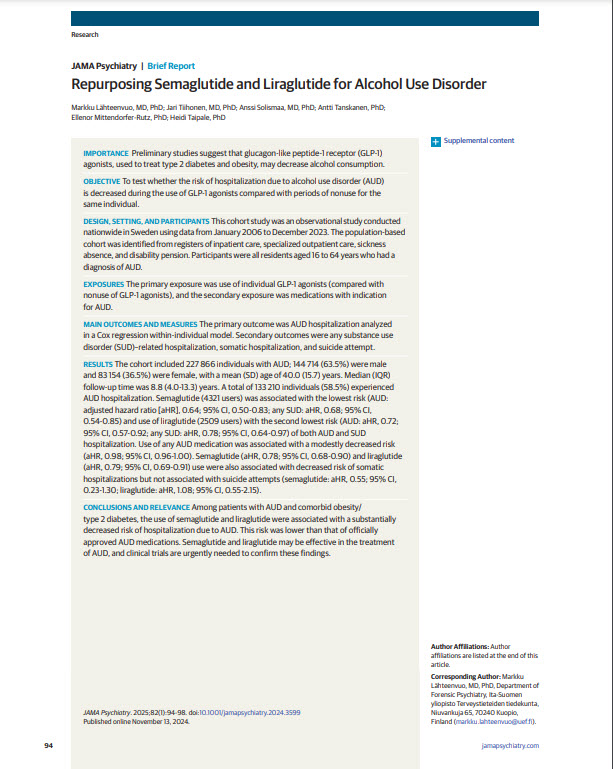
This research article from JAMA Psychiatry reports on a large-scale Swedish cohort study investigating the effects of GLP-1 agonists, specifically semaglutide and liraglutide, on alcohol use disorder (AUD). The study found a significantly reduced risk of AUD-related hospitalizations among users compared to non-use periods, surpassing the effectiveness of standard AUD medications. These findings suggest a potential new treatment avenue for AUD, though further randomized clinical trials are needed to confirm causality. The study leveraged nationwide Swedish registries to track patient data and employed a within-individual analysis design. The results highlight semaglutide and liraglutide as promising candidates for AUD treatment.
AI Generated Summary Podcast (11:13)
Summary
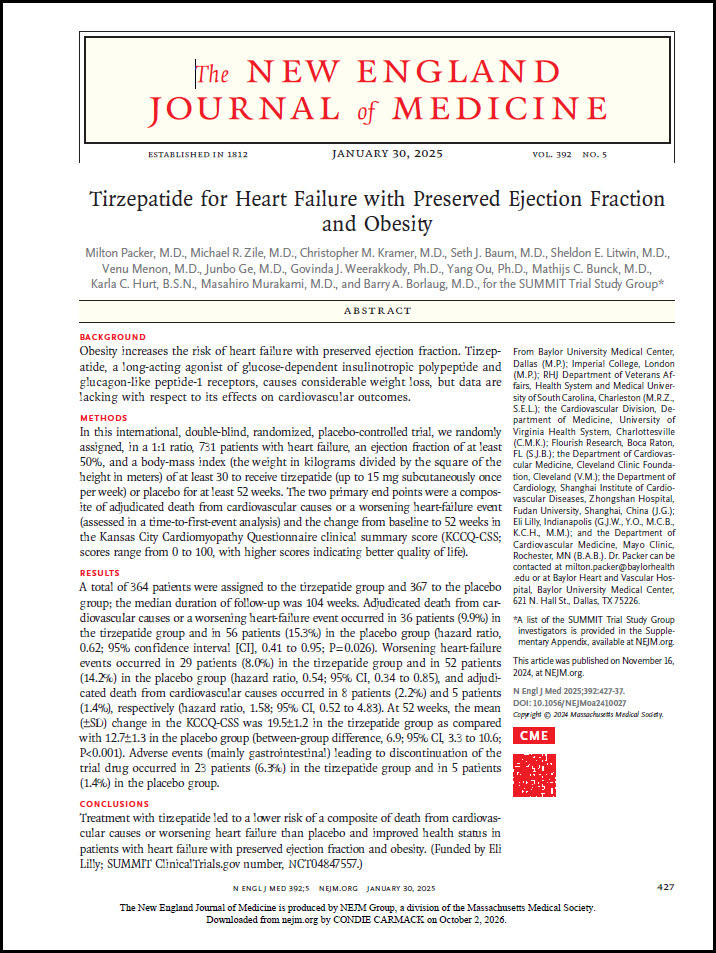
This article, published in the New England Journal of Medicine, reports on the SUMMIT trial, a randomized, placebo-controlled study investigating the effects of tirzepatide, a weight-loss drug, on cardiovascular outcomes in obese patients with heart failure and preserved ejection fraction. The trial showed that tirzepatide significantly reduced the risk of death from cardiovascular causes or worsening heart failure compared to placebo. Furthermore, tirzepatide improved patients’ quality of life and exercise capacity. Adverse events, primarily gastrointestinal, were reported, but were generally manageable. The findings suggest tirzepatide may offer a beneficial treatment option for this patient population.
AI Generated Summary Podcast (20:37)
Summary
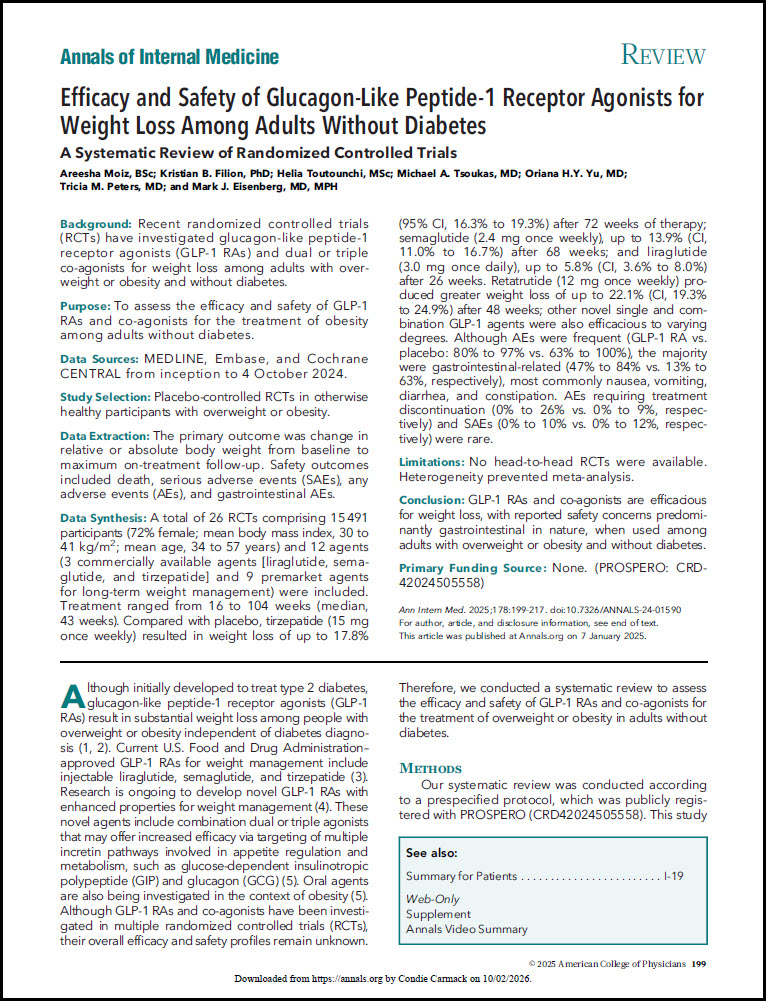
This systematic review assesses the effectiveness and safety of glucagon-like peptide-1 receptor agonists (GLP-1 RAs) for weight loss in adults without diabetes. The analysis included 26 randomized controlled trials with over 15,000 participants, examining various GLP-1 RAs and co-agonists. Results indicated that these agents, particularly tirzepatide, semaglutide, and retatrutide, led to significant weight loss compared to placebo. While adverse events, mainly gastrointestinal issues, were common, serious events were rare. The study concludes that GLP-1 RAs are effective for weight loss in non-diabetic adults with overweight or obesity, with manageable safety concerns. These medications also showed benefits in reducing BMI, waist circumference, and blood pressure.
AI Generated Summary Podcast (15:58)
The connection between a new class of weight loss drugs and cancer risk reduction – MSKCC
Memorial Sloan Kettering Cancer Center shared a post on X:
“In this episode of Cancer Straight Talk, Diane Reidy-Lagunes sits down with MSK’s Neil Iyengar to discuss the intriguing connection between a new class of weight loss drugs, called GLP-1 agonists, and cancer risk reduction.
The Battle of the Incretins is ON!
AI GENERATED SUMMARY PODCAST (13:12)
Summary
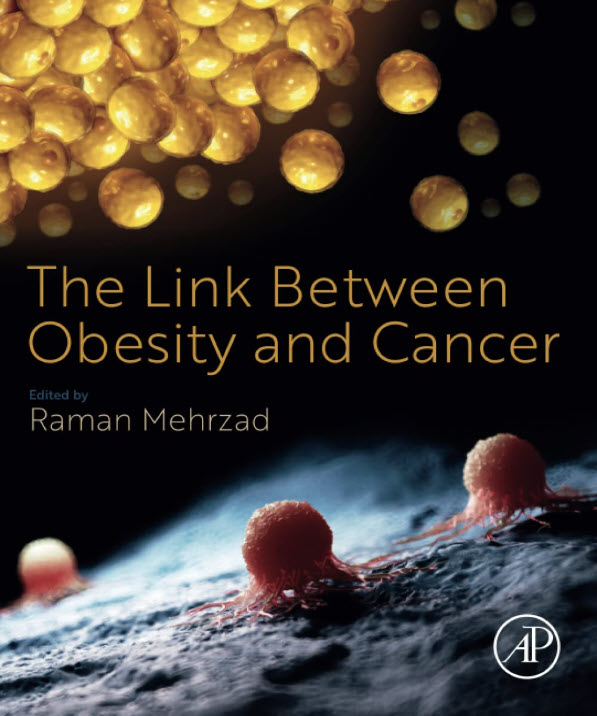
The Link Between Obesity and Cancer provides a comprehensive and up-to-date review of the relationship between obesity and cancer. It opens with a global perspective on obesity and cancer incidence, followed by in-depth discussions on cancers for which we have sufficient and new evidence of a causal relationship with obesity. Readers will gain fundamental knowledge about which different cancer types are related to obesity and why. The book provides a significant knowledge base for clinicians to know when to act, along with specific management guidelines for patients with obesity as well as how to understand the potential risk factors and how to directly or indirectly minimize these risks. The book also provides scientific data for any researcher in the field, identifying the molecular mechanisms and links behind the development of malignancy and promoting research on new affective target pathways m developing therapeutic strategies.
Key Features
• Provides essential knowledge on how to understand the link between obesity and cancer and why and how this occurs; enables readers to gain fundamental knowledge on which cancer types are related to obesity and why
• Provides a significent knowledge base for clinicians on when to act, along with patient management guidelines for patients with obesity as well as how to understand potential risk factors and how to minimize them
• Contains new scientific data and findings for researchers, which identify the molecular mechanisms and links behind the development of malignancy
The book, The Link Between Obesity and Cancer is on sale at Amazon or at ScienceDirect®.
Summary
AI Generated Summary Podcast (7:52)

Engineers use AI, Reddit to identify potential side effects of unapproved new GLP-1
Retatrutide, a next-generation GLP-1 weight-loss drug, is not yet approved for use. Nevertheless, online forums reveal that people are purchasing unapproved versions of the drug, which are not intended for human consumption, and sharing their

Schizophrenia and type 2 diabetes are linked, but GLP-1s could help manage the risks
Friday, October 16 – Treatment with glucagon-like peptide-1 receptor agonists (GLP-1s) was associated with lower risks of psychiatric hospitalization and psychiatric emergency department visits in people with both schizophrenia and type 2 diabetes (T2D), compared

Ozempic and Wegovy linked to rare risk of sudden vision loss
Friday, October 16 – Popular diabetes and weight loss drugs such as Ozempic and Wegovy have been linked to a slightly increased risk of a rare condition that can cause sudden, potentially permanent vision loss.

Trial finds 2 strategies to maintain weight loss results after stopping GLP-1s
Thursday, October 15 – Trial finds 2 strategies to maintain weight loss results after stopping GLP-1s.

Verdiva ends mid-stage study of oral GLP-1 amid ‘market evolution’
Thursday, October 15 – The candidate is an oral version of ecnoglutide, a subcutaneous formulation of which is approved in China for type 2 diabetes and weight management. Pfizer owns commercialization rights for ecnoglutide in

New study examines GLP-1 impact on interactions with criminal justice system, employment, housing stability
Thursday, October 15 – A wave of clinical trials have begun to test the ability of GLP-1 weight loss drugs to quell various substance use disorders, with some promising results. A new trial announced…

These Are The Most Common GLP-1 Side Effects — And What Doctors Say You Need For Relief
Thursday, October 15 – Doctors suggest digestive aids, protein supplements, skin care and more.

Orforglipron shows weight loss benefits for both menopause and type 2 diabetes
Wednesday, October 14 – Orforglipron shows weight loss benefits for both menopause and type 2 diabetes