
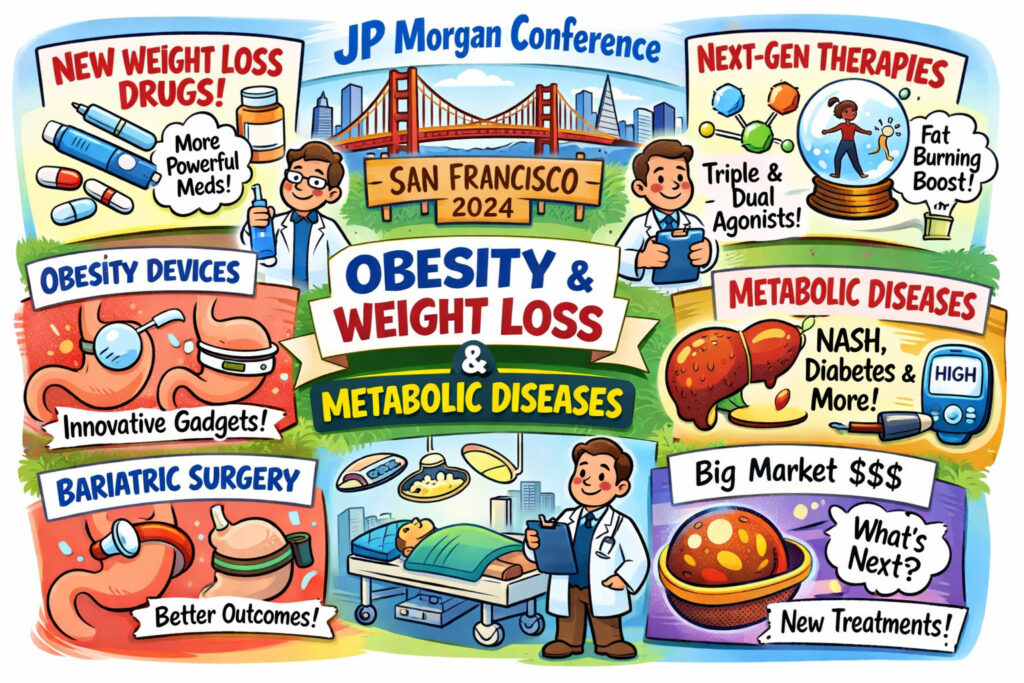
Here’s a summary of the major announcements and trends from the 44th Annual JP Morgan Healthcare Conference in San Francisco (January 12–15, 2026) specifically in the areas of obesity, weight-loss drugs, metabolic disease, and adjacent therapies: (BioSpace)
Fierce Biotech
scanx.trade
Reuters
Reuters
Ad Hoc News
🧠 1. Shift Toward Oral Obesity Drugs
A major theme at JPM 2026 was the transition from injectable to oral weight-loss therapies. Companies highlighted oral GLP-1 drugs (like Novo Nordisk’s Wegovy pill and Lilly’s orforglipron) expected to gain large market share by the end of the decade. (Reuters)
Wegovy (oral semaglutide) has already been approved and is seen as a catalyst for broader adoption in obesity treatment. (Wikipedia)
💊 2. Pipeline Updates: New Obesity Therapies in Development
Amgen’s MariTide—a novel therapy combining GLP-1 receptor agonism with GIP receptor antagonism—showed positive Phase 2 results with up to ~20 % weight loss and significant weight-loss maintenance potential. It’s being evaluated monthly or quarterly. (Reuters)
Next-generation agents and alternate mechanisms were featured, including companies advancing dual/triple receptor agonists and other innovative approaches to metabolic dysfunction and adiposity. (Cancer Obesity Connection)
🧬 3. Big Pharma Strategy & Market Outlook
Novo Nordisk doubled down on obesity and diabetes leadership, noting challenges from competitors but reinforcing growth plans around GLP-1 platforms and pipeline expansion. (Fierce Biotech)
Eli Lilly highlighted its broad weight-loss portfolio and its use of AI in drug discovery, with a strong focus on FDA decisions in 2026 (including orforglipron) and expanding digital and online pharmacy channels. (Ad Hoc News)
AbbVie unveiled strategic expansion into the obesity market via amylin-based therapies (e.g., GUBamy), potentially offering better tolerability profiles and complementary options to GLP-1 drugs. (Reuters)
Pfizer reinforced its obesity ambitions after acquiring Metsera, planning multiple Phase 3 trials for long-acting injectable GLP-1 assets as part of a major growth strategy. (BioPharma Dive)
📈 4. Commercial & Market Trends
Industry leaders emphasized consumer willingness to pay cash for obesity drugs, potentially reshaping distribution through online pharmacies and direct-to-patient models. (BioPharma Dive)
The obesity treatment market continues to be forecasted as a multi-hundreds-billion-dollar opportunity by 2030, with oral therapies and diversified mechanisms expanding its reach. (BioPharma Dive)
🧪 5. Beyond Obesity: Broader Metabolic Disease Signals
Several biotechs highlighted diabetes and metabolic disease pipelines, including agents aiming to improve beta-cell function and long-term diabetes control. (TipRanks)
Rare but notable mentions included expansion into liver disease (MASH) and other metabolic-associated indications, underscoring a trend toward broader metabolic care strategies. (KBR)
🔑Key Takeaways
🔹 Obesity drugs are front-and-center, not just in clinical efficacy but in commercial strategy and market positioning. (BioSpace)
🔹 Oral agents are poised to significantly disrupt a market long dominated by weekly injectables. (Reuters)
🔹 The era of weight loss + metabolic disease portfolios is deepening, with major pharmas and biotechs alike investing in diverse mechanisms and patient models.