
Semaglutide and Lower Fracture Risk Versus Sleeve Gastrectomy
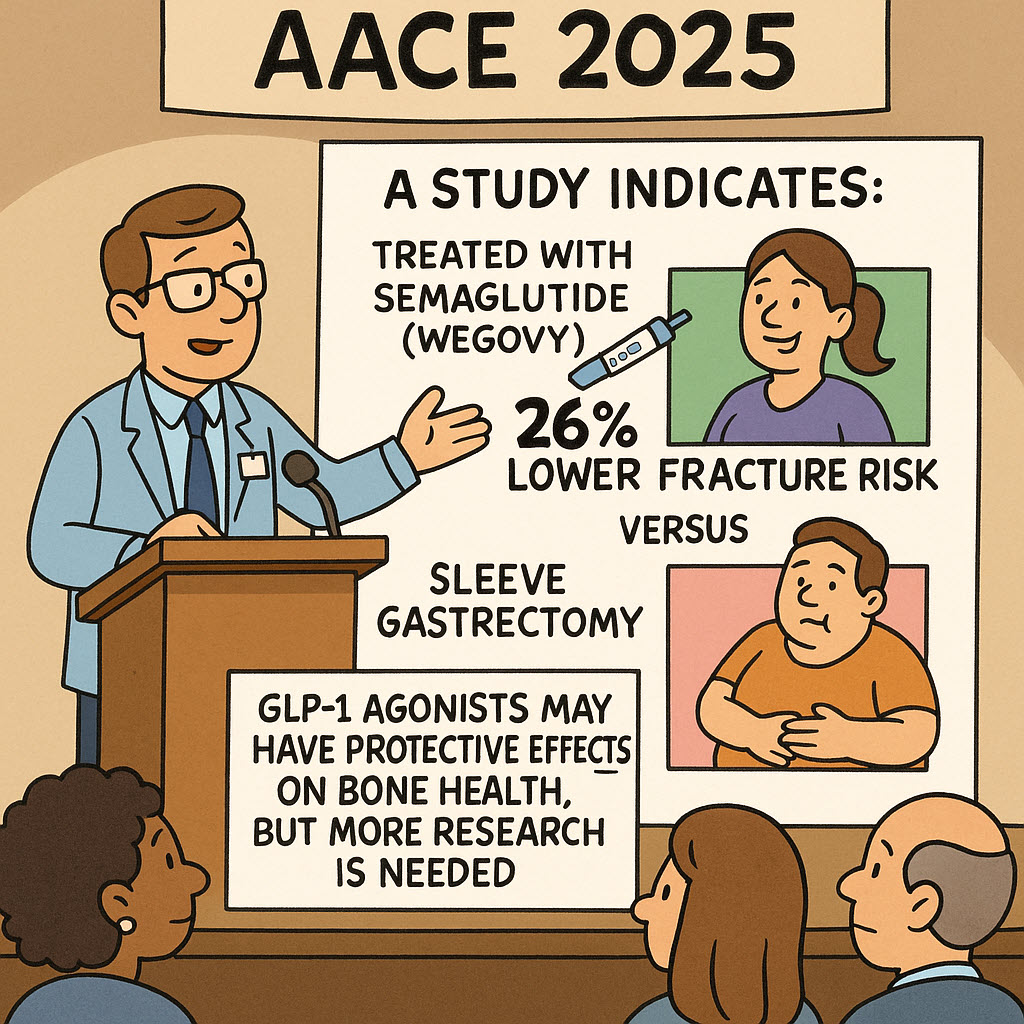
According to an article in Medscape Medical News, a study presented at the AACE 2025 conference indicates that individuals treated for obesity using semaglutide (Wegovy) may experience a significantly lower risk of fractures compared to those who undergo sleeve gastrectomy. Researchers utilized electronic health record data and observed a 26% reduction in fracture risk for the semaglutide group over a three-year period. The study […]
News Article – How to make your own GLP-1 drugs at home.
Are you wanting to save some money? Discouraged by the high price of the GLP-1 drugs from the big pharmaceutical companies and the compounding pharmacies? Here is an overview of what to expect in creating your own personal drug company. Both semaglutide and tirzepatide are GLP-1 RA (Glucose-like Peptide-1 Receptor Agonists). Agonists means that they […]
Weight-Loss Drugs’ Environmental Cost

Experts warn that current methods of making the peptide drugs are environmentally unfriendly April 28, 2024 by Aayushi Pratap Chemical & Engineering News, Volume 102, Issue 13 This article explores the significant environmental challenges associated with the rapidly increasing production of popular peptide-based weight-loss drugs like Wegovy and Zepbound. It highlights that current manufacturing methods, primarily solid-phase peptide […]
Review Article – Precision Medicine for Obesity Pharmacotherapy
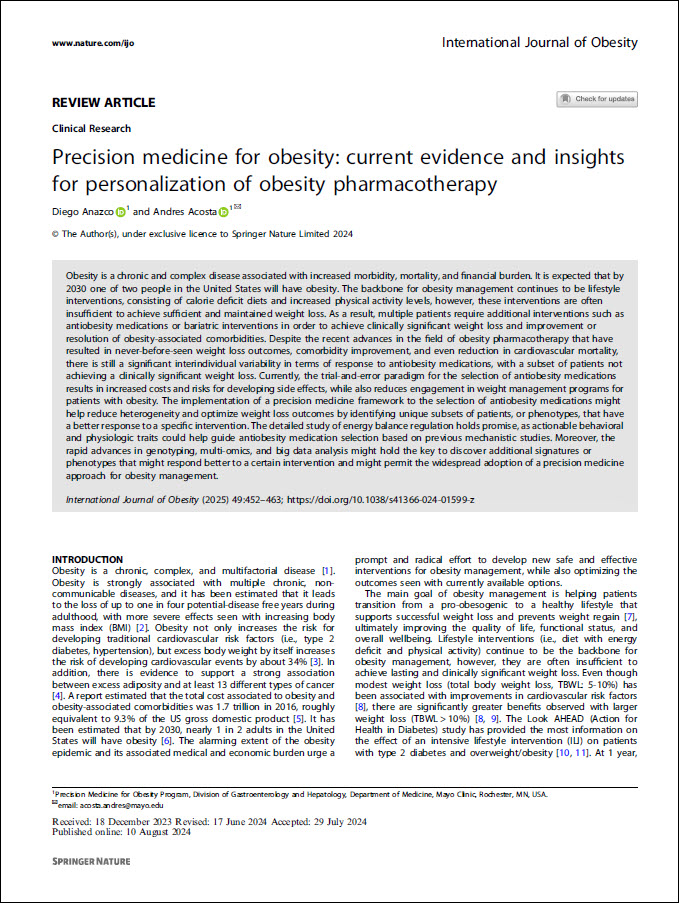
Anazco D, Acosta A. Precision medicine for obesity: current evidence and insights for personalization of obesity pharmacotherapy. Int J Obes (Lond). 2025 Mar;49(3):452-463. doi: 10.1038/s41366-024-01599-z. Epub 2024 Aug 10. PMID: 39127792; PMCID: PMC11931505. Published 10 August 2024 This review article explores the potential of precision medicine to improve obesity management, moving away from the current trial-and-error approach for selecting medications. […]
Journal Article – Phenotype-Guided Antiobesity Medication Selection Enhances Weight Loss
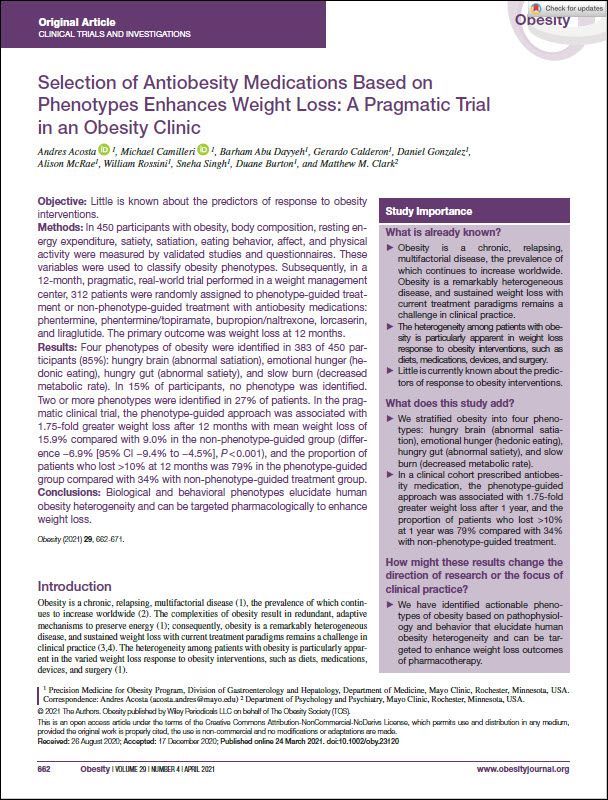
This academic paper examines whether tailoring anti-obesity medication based on specific patient characteristics, or “phenotypes,” improves weight loss outcomes compared to standard treatment. Researchers classified individuals with obesity into four main phenotypes: “hungry brain” (abnormal satiation), “emotional hunger” (hedonic eating), “hungry gut” (abnormal satiety), and “slow burn” (decreased metabolic rate). A clinical trial showed that the phenotype-guided approach resulted in significantly greater weight loss and […]
Journal Article – Tirzepatide Versus Semaglutide for Obesity Treatment
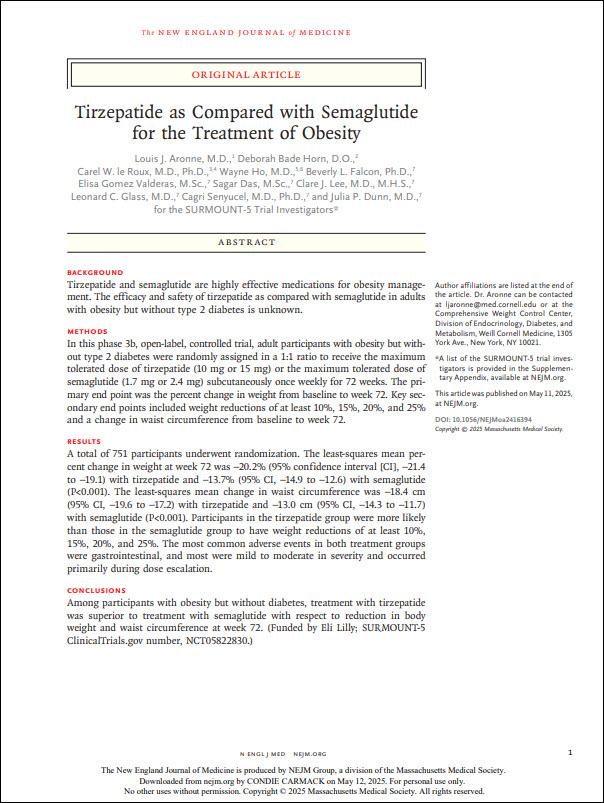
This paper describes a phase 3b clinical trial comparing tirzepatide and semaglutide for weight management in adults with obesity but without diabetes. The SURMOUNT-5 trial randomly assigned participants to receive either tirzepatide or semaglutide weekly for 72 weeks. Tirzepatide was found to be superior to semaglutide in achieving greater reductions in both body weight and waist circumference. While both medications led to similar rates of overall adverse events, predominantly gastrointestinal, tirzepatide resulted […]
Journal Article – Implantable Drug Delivery Systems for GLP-1s Receptor Agonists. No more shots! What could go wrong?
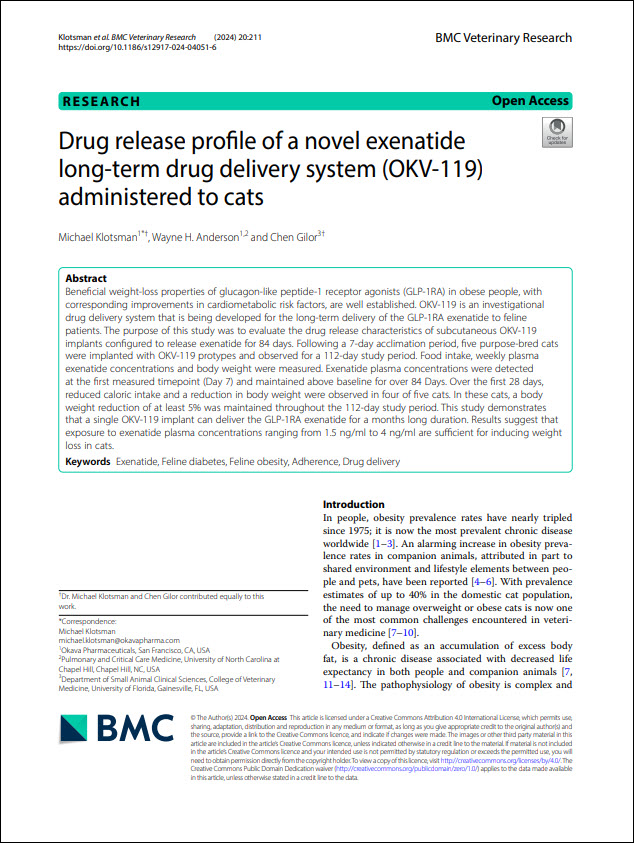
Several companies and research groups are actively exploring implantable drug delivery systems for GLP-1 receptor agonists (GLP-1 RAs), aiming to improve patient adherence, convenience, and therapeutic outcomes. Here’s a summary of key players and motivations: Getting drugs into a human body is harder than it looks. The GLP1 need to be in the blood to […]
Journal Article – Real-world use of tirzepatide among individuals without evidence of type2 diabetes: Results from the Veradign® database
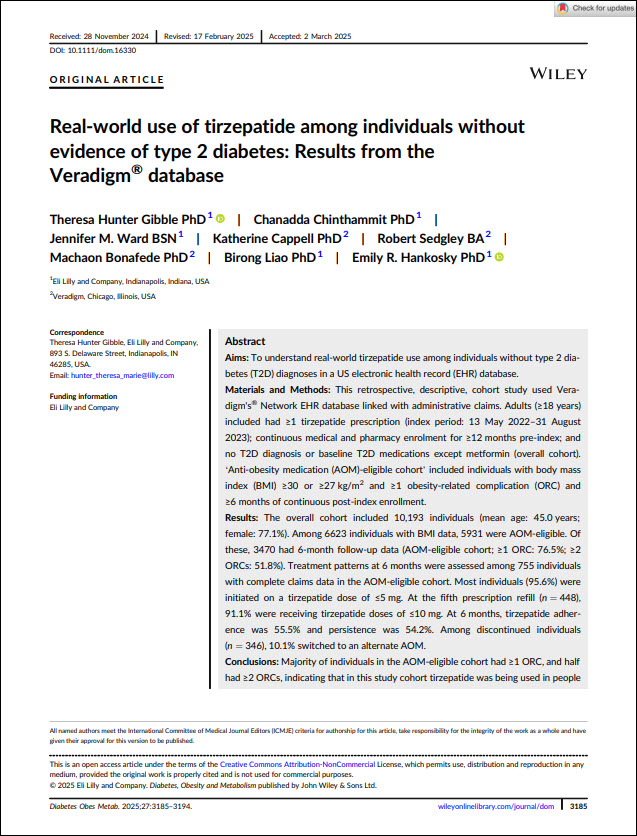
March 14, 2025 Hunter Gibble T, Chinthammit C, Ward JM, Cappell K, Sedgley R, Bonafede M, Liao B, Hankosky ER. Real-world use of tirzepatide among individuals without evidence of type 2 diabetes: Results from the Veradigm® database. Diabetes Obes Metab. 2025 Jun;27(6):3185-3194. doi: 10.1111/dom.16330. Epub 2025 Mar 14. PMID: 40084533; PMCID: PMC12046461. This source describes […]
Journal Article – GIPR Antagonism and GLP-1R Agonism Metabolic Effects
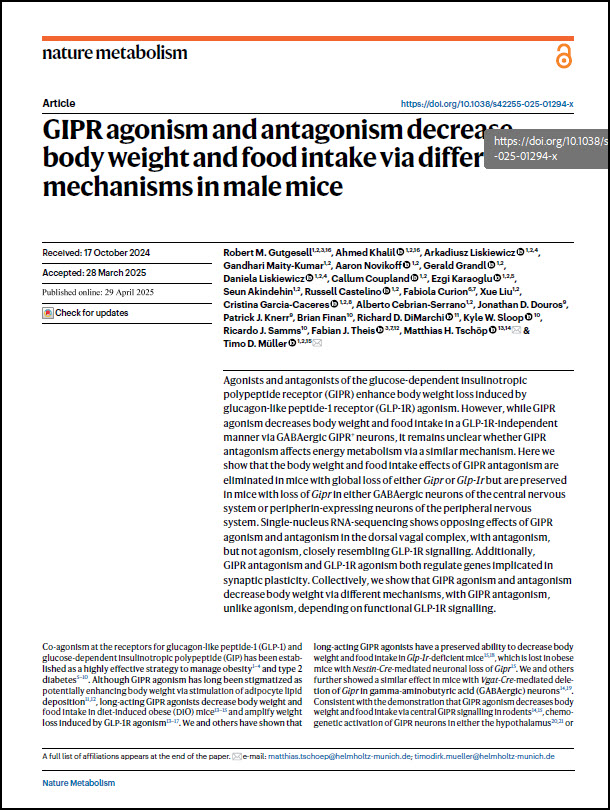
Gutgesell RM, Khalil A, Liskiewicz A, Maity-Kumar G, Novikoff A, Grandl G, Liskiewicz D, Coupland C, Karaoglu E, Akindehin S, Castelino R, Curion F, Liu X, Garcia-Caceres C, Cebrian-Serrano A, Douros JD, Knerr PJ, Finan B, DiMarchi RD, Sloop KW, Samms RJ, Theis FJ, Tschöp MH, Müller TD. GIPR agonism and antagonism decrease body weight […]
Journal Article – GLP1-RAs and Thyroid Cancer Risk
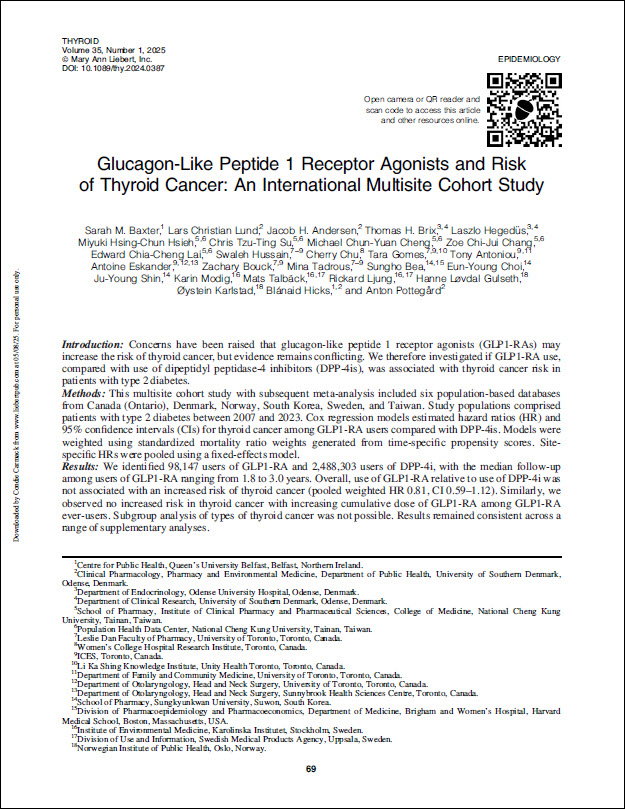
January 16, 2025Thyroid Vol 35, No. 1 This research article investigates the potential link between glucagon-like peptide 1 receptor agonists (GLP1-RAs), medications used for type 2 diabetes, and the risk of developing thyroid cancer. Conducted as a large, international study across multiple sites in six countries, it compared GLP1-RA users with those using dipeptidyl peptidase-4 inhibitors (DPP-4is), another class […]