
Lilly’s Oral GLP-1, Orforglipron, Delivered Superior Blood Sugar Control and Weight Loss Compared to Oral Semaglutide in Head-to-Head Type 2 Diabetes Trial Published in The Lancet
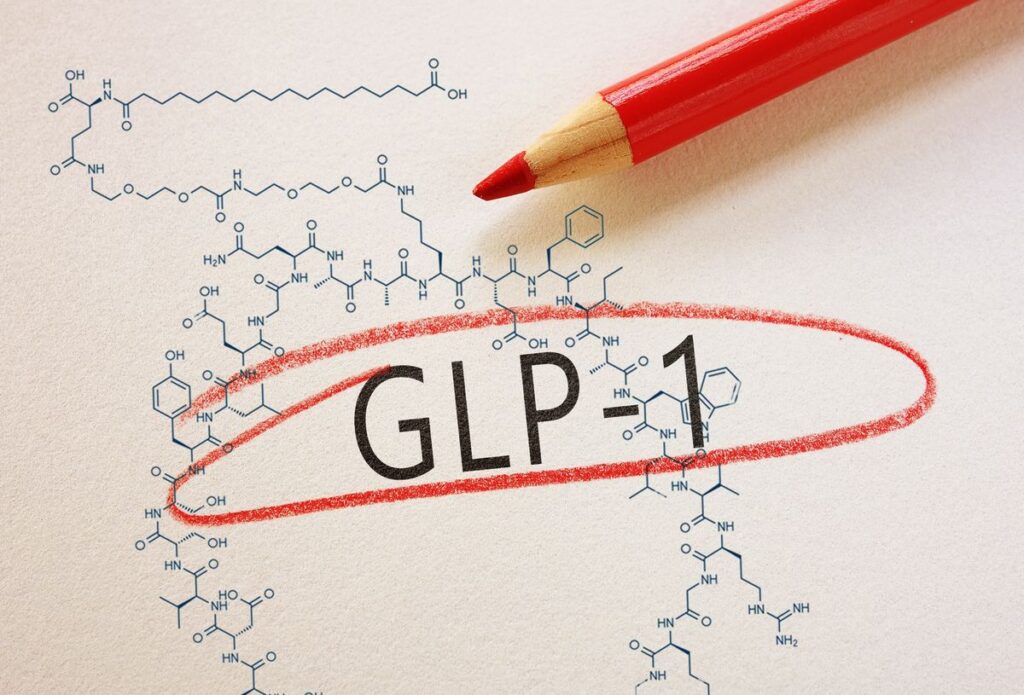
INDIANAPOLIS, Feb. 26, 2026 /PRNewswire/ — Eli Lilly and Company (NYSE: LLY) today announced detailed results from ACHIEVE-3, the first head-to-head Phase 3 trial evaluating the safety and efficacy of orforglipron, a small molecule oral GLP-1…
Novo Nordisk Announces Significant Reduction in US List Price for Wegovy, Ozempic, and Rybelsus (semaglutide medicines), Building on Continued Efforts to Expand Access

Plainsboro, NJ, US and Bagsværd, Denmark, February 24, 2026 –Today, Novo Nordisk announced that, effective January 1, 2027, the company will lower the list price, or wholesale acquisition cost (WAC), of Wegovy® (semaglutide)…
What is ‘food noise’? UK surgeon explains why people with obesity are more reactive to food; shares 5 ways to curb it
“Food noise” is a real thing where some brains experience heightened reward sensitivity associated with food. Dr Rajan explains how GLP-1 treatment can help.
Summary of JP Morgan Conference in Obesity and Metabolic Diseases
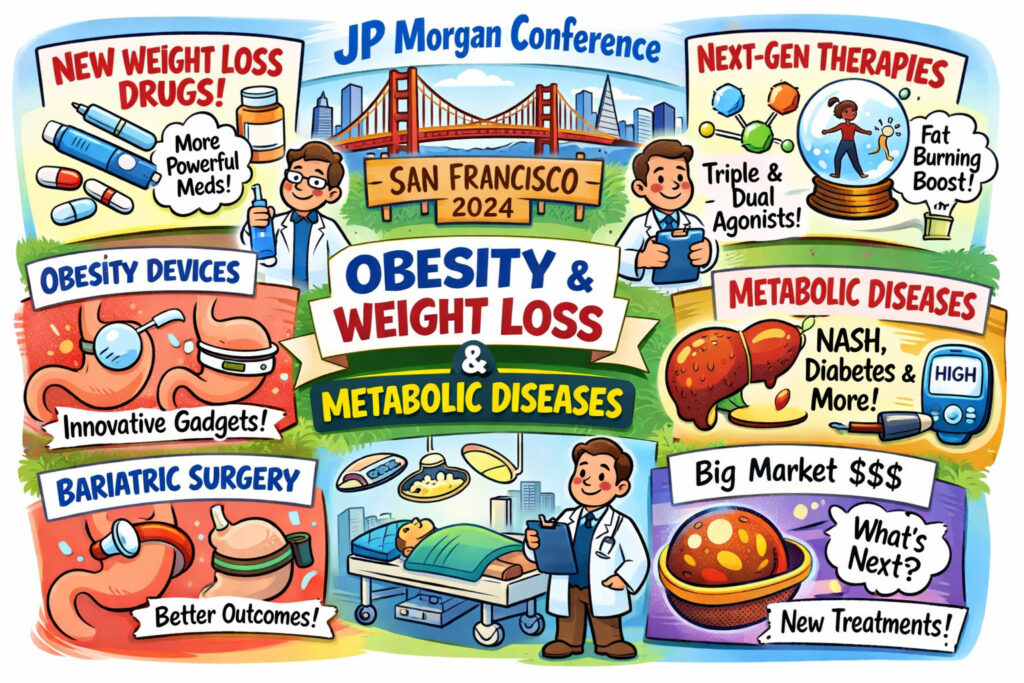
Here’s a summary of the major announcements and trends from the 44th Annual JP Morgan Healthcare Conference in San Francisco (January 12–15, 2026) specifically in the areas of obesity, weight-loss drugs, metabolic disease, and adjacent therapies: (BioSpace) Fierce Biotechscanx.tradeReutersReutersAd Hoc News 🧠 1. Shift Toward Oral Obesity DrugsA major theme at JPM 2026 was the […]
Day 1 @ JP Morgan in Obesity Drugs and Therapies
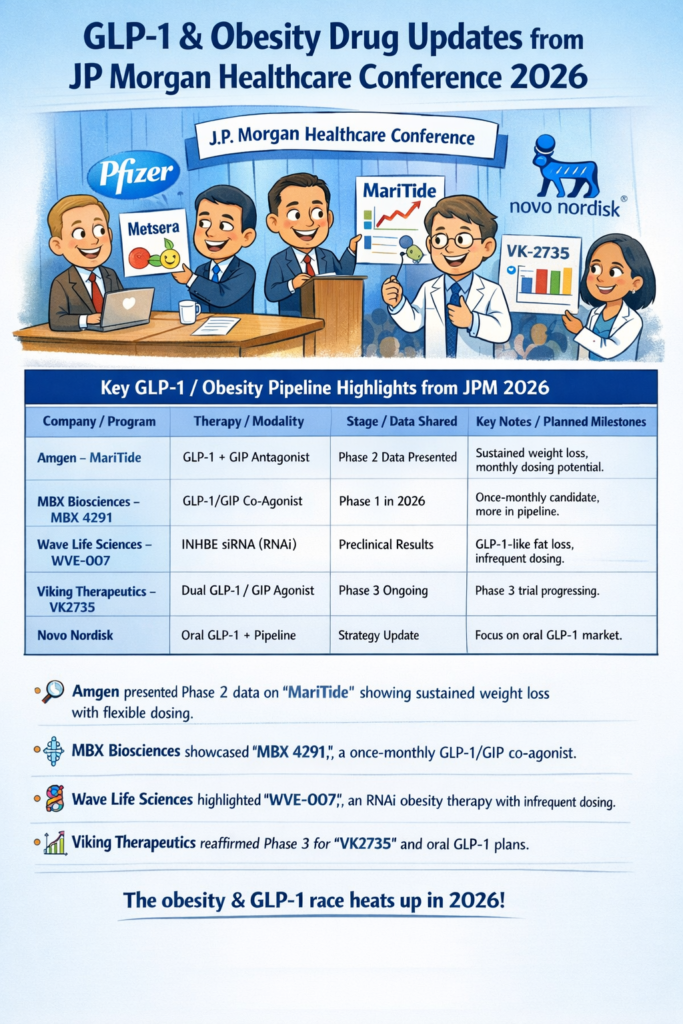
JP Morgan 2026: Obesity & GLP-1 Therapies Take Center StageWhat the Latest Deals and Data Mean for the Future of Metabolic MedicineThe J.P. Morgan Healthcare Conference once again served as the bellwether for where biotech and pharma are headed—and in 2026, GLP-1 and obesity therapeutics dominated the conversation.From next-generation incretin drugs to RNA-based obesity targets […]
Day 2 @ JP Morgan in Obesity Drugs and Therapies
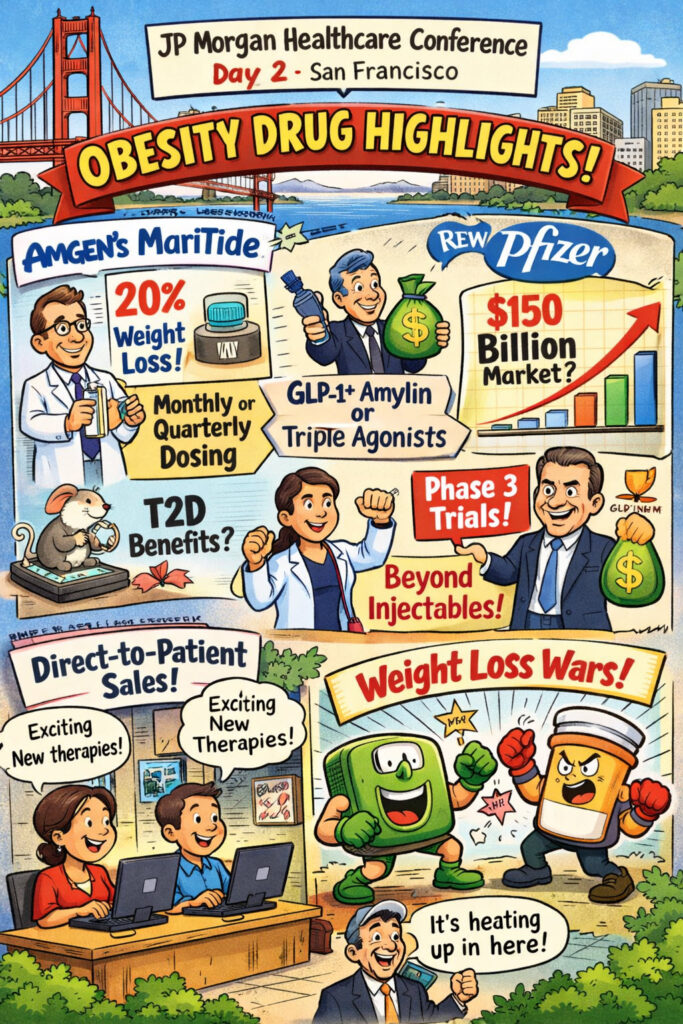
Here are the **highlights from Day 2 of the JP Morgan Healthcare Conference (San Francisco) specifically related to obesity, weight-gain therapies, and related drug developments Fierce PharmaPharmaceutical TechnologyReutersFierce BiotechPharmaceutical Technology 🧪 New & Emerging TherapiesAmgen’s MariTide weight-loss programAmgen touted positive data on its experimental obesity drug MariTide, showing the therapy helped trial participants maintain significant […]
Cardiologist explains benefits of GLP-1 drugs go beyond just weight loss: ‘Future of how we treat heart, liver…’
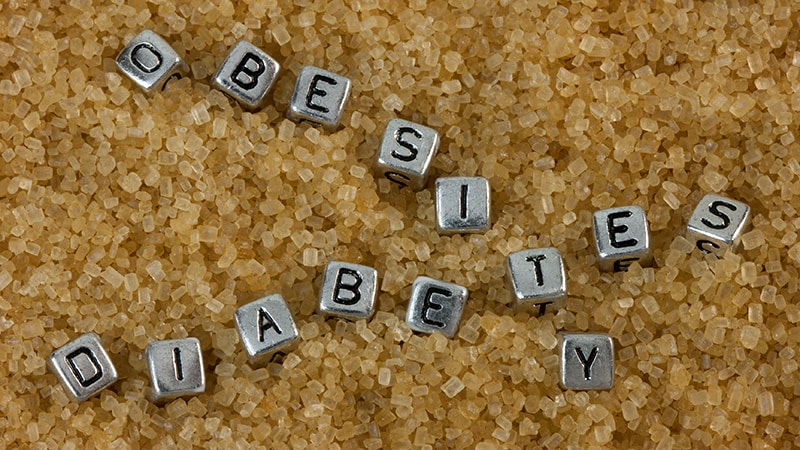
Everyone’s talking about weight loss drugs like Ozempic, Wegovy and Mounjaro and their implications on weight loss – but their benefits go way beyond that.
JP Morgan Healthcare Conference – Day 3 Highlights (Obesity & Metabolic Therapies)

JP Morgan Healthcare Conference – Day 3 Highlights (Obesity & Metabolic Therapies)1. Shift From “Weight Loss” to Chronic Metabolic DiseaseDay 3 discussions made it clear that industry messaging is moving away from cosmetic weight loss and toward lifelong metabolic disease management.Key framing heard repeatedly:Obesity as a multisystem, chronic diseaseGLP-1–based therapies positioned alongside statins or antihypertensives, […]
Cardiologist with 20 years of experience shares the truth behind GLP-1 drugs and weight loss: ‘Disaster always follows…’
Dr Bhojraj explains that GLP-1 isn’t a medication but a natural hormone, and while it can help, they have side effects and aren’t meant for lifelong use.
Does Ozempic need to be taken forever once started? UK surgeon explains the effects of stopping GLP-1 drugs
According to Dr Rajan, GLP-1 drugs such as Ozempic is not designed for long-term weight loss, which requires a comprehensive approach.